Conservation and AI
Conservation needs to move faster and more effectively with a paradigm shift from ‘losing more slowly’ to ‘recovering lost ecosystems’ if we are to achieve a resilient planet.
By leveraging artificial intelligence (AI) to combine the totality of human knowledge with the sum of human observations, we can achieve a step change in our ability to deliver effective conservation.
I am working to establish myself as a bridge between AI research and practical conservation.
My current research concerns the development of AI technologies to streamline the collation of evidence from published and grey literature to better inform conservation action. I recently published a piece in Nature, which explored the way in which Large Language Models are changing the face of published literature, and what we can do to combat the potential flood of false information. Additionally, I am focused on co-designing AI tools which will allow decision makers to interact with evidence in an intuitive way.
I recently authored a Horizon Scan, looking to highlight ways in which AI can revolutionise conservation. In this paper myself and an international team of Conservation scientists and AI experts grappled with where the big advances may emerge – what the pitfalls may be – and how does conservation best organise itself to embrace this technology responsibly.
Here are my publications in this area, with links:


PhD Research
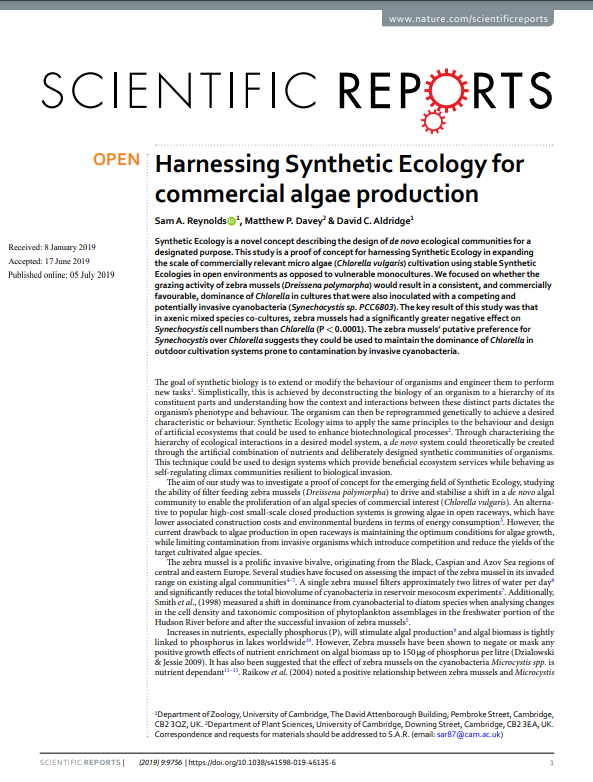
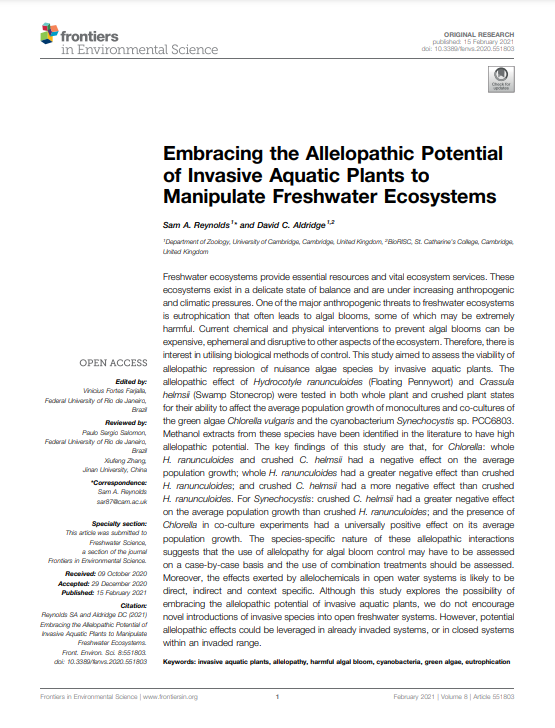
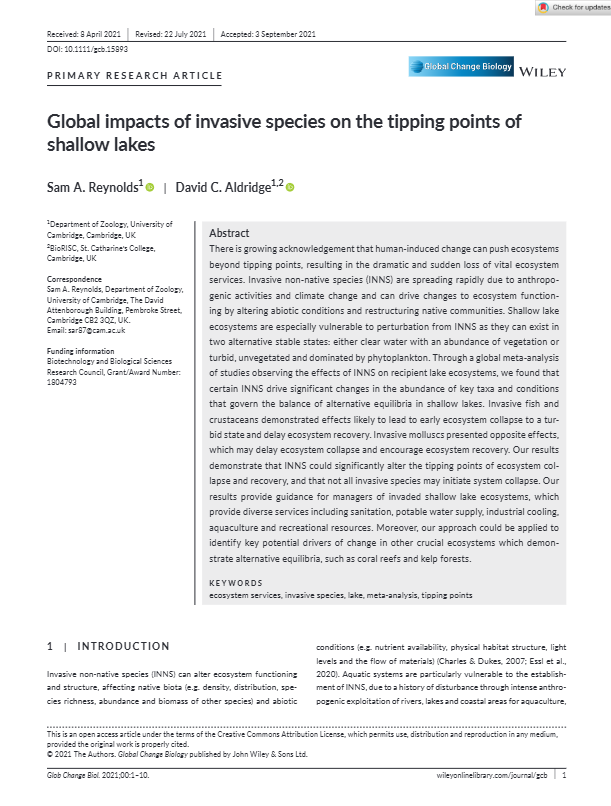
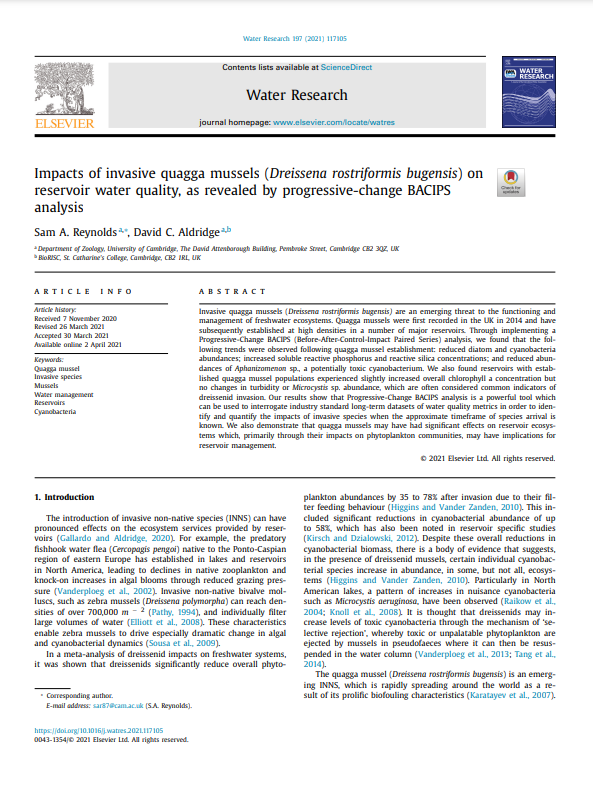
My PhD thesis was titled “Invasive non-native species and the management and exploitation of freshwater ecosystems”. I explored the impact of invasive species, focussing particularly on invasive freshwater mussels and plants, on the collapse and recovery of freshwater ecosystems. Identifying both how invasive species can bring about catastrophic shifts between clear water or phytoplankton dominated alternative equilibria and may also predictably alter phytoplankton communities either driving or suppressing harmful algal blooms. My research was fully funded by a BBSRC studentship.
My research has been featured in over 100 news outlets (e.g. The Independent and Evening Standard) and the Cambridge University News website. My publication on the global impacts of invasive species on shallow lake ecosystems is in the 95th percentile of all recorded Altmetric scores (914) and 19th highest of over 7000 publications in the high impact journal Global Change Biology.

 Sam Reynolds: Ai, Conservation & Ecology